Porsche 911 GT3 Review: Our Verdict After 18,600 Miles
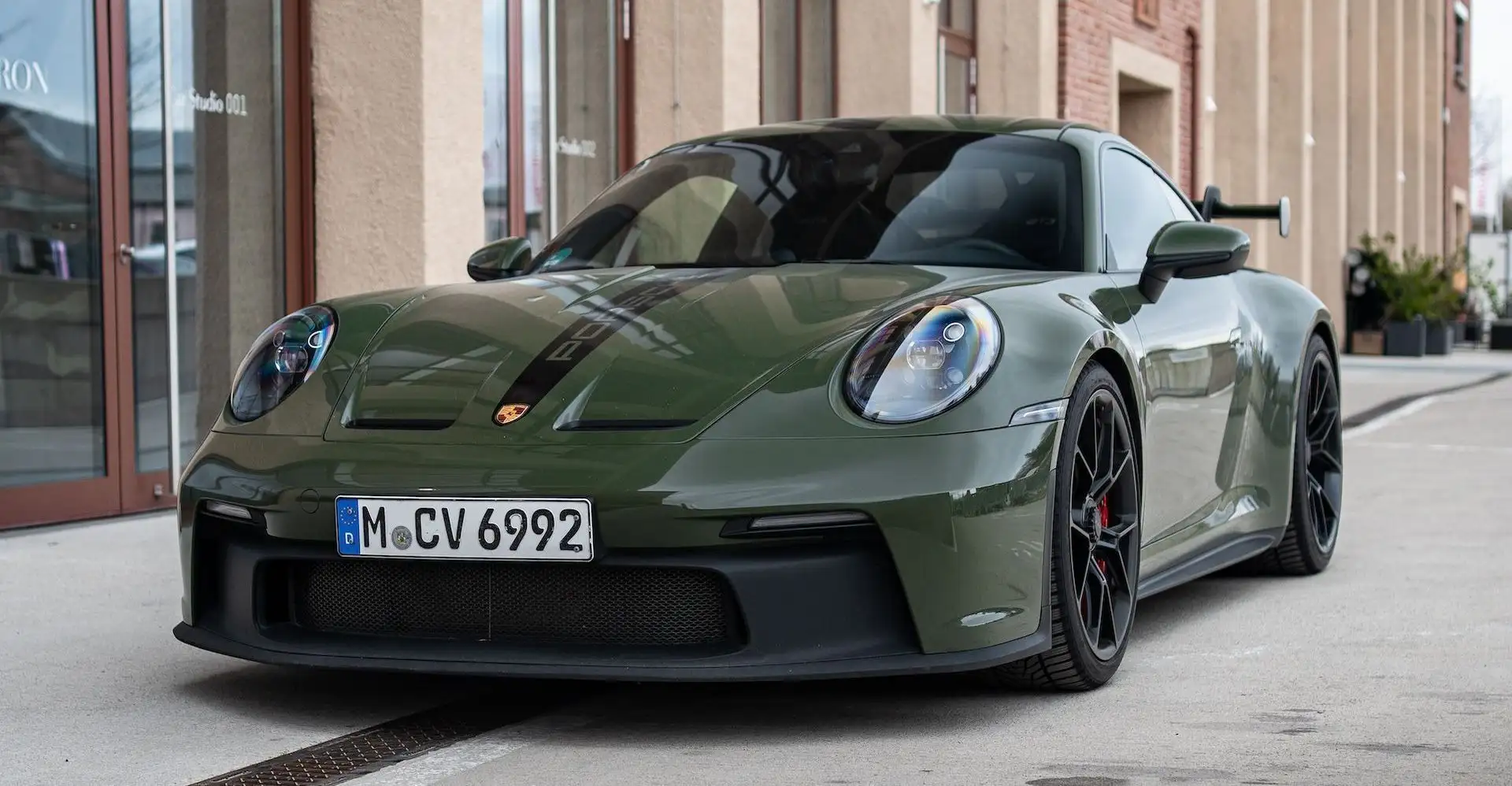
Our Porsche 911 GT3 992 has now covered around 18,600 miles in a little over six months and has its first service behind it. So we're drawing an interim verdict and talking about what our GT3 does especially well and where it maybe doesn't shine quite as brightly. Though with a Porsche, and above all with a GT3, it's not that easy to find something that doesn't thrill you.
So look forward to our experience in the Porsche 911 GT3 long-term test. If you'd like to drive a GT3 or other Porsche models yourself, you can rent a Porsche from us.
Table of Contents
- Does the 992 GT3 still sound like a GT3 should? Spoiler: it screams
- The transmission: dual-clutch dominates everything
- The 4.0-liter naturally aspirated engine: power and fun galore despite a challenging concept
- The design: beauty and brutality
- The sports car's quality convinces
- Despite a sub-7-minute Nürburgring lap: not that little space
- And now for the less shiny points:
Heads-up: the video is still in German – the English version is coming soon. Subscribe to our YouTube channel so you don't miss it!
Does the 992 GT3 still sound like a GT3 should? Spoiler: it screams
Ask fans of the street-legal race 911 what they value most about it, and the answer is often the sound. The unmistakable note of the naturally aspirated flat-six, which has gained a bit more displacement again and again since the 996 generation was introduced, isn't just loud – it has an intoxicating tonality.
That's exactly why I had certain doubts with the 992 as to whether that sound would still be as overwhelming. We already had the Porsche 718 Cayman GT4 in the fleet, which disappointed us because its predecessor was noticeably louder. And tightening emissions rules haven't helped: our Euro-spec 992 GT3 comes with a gasoline particulate filter that noticeably muffles the sound. (US cars don't get the filter - so if anything, yours will sound even better than ours.)
But anyone who wants one of the first GT models has to be patient anyway, because the order books are full, and you can expect a wait of at least 2 years.
Yet on delivery day, our worries evaporated. Of course, you should take it easy for the first 1,000 miles and not rev the Porsche straight to 9,000 rpm. But the fireworks that already kick off at 5,000 rpm are nothing like a regular 911. And the best part: the sound isn't just loud, it carries the GT3's character forward. Higher up in the rev range, the same high-pitched scream unfolds that instantly pumps adrenaline into your bloodstream and switches your brain to "Give me more, rev higher!"
In other words: yes, the sound is still an absolute banger!
The transmission: dual-clutch dominates everything
The good news first: the GT3 can be ordered with either a manual transmission or an automated gearbox. We opted for the automatic, which is of course a dual-clutch (PDK). And even though dual-clutch transmissions are no longer reserved for hardcore sports cars these days, you still notice the difference clearly – especially in shift speed. The gears change so fast that there's no interruption in power delivery. And I mean really none.
It's so much fun that even cruising leisurely through town, you keep catching yourself shifting up and down on the paddles.
The transmission shows what it can do on the track, too. It knows exactly which gear you need at what speed and at which corner exit. Precise fine-tuning that serves its purpose superbly. Hats off to Porsche's engineers - there probably won't ever be a better gearbox.
The 4.0-liter naturally aspirated engine: power and fun galore despite a challenging concept
On to the heart of the matter: the engine. With 4.0 liters of displacement and 502 hp, the physical limit of this ever-evolving powerplant has now been reached. Without forced induction, there's probably nothing more to squeeze out here. Surprisingly, the GT3 can still keep up with rivals that rely on V8 engines and twin turbochargers.
That shows not only in the 0 to 62 mph sprint of 3.4 seconds, but also, and this is far more important to me, in the actual driving feel. Despite the linear power delivery, at around 5,000 rpm you feel another punch that gives you the sense a turbo would be superfluous.
So you don't miss any extra power. You do have to be aware, though, that on the Autobahn you won't be leaving a 911 Carrera S behind - and especially not a GTS.
The design: beauty and brutality
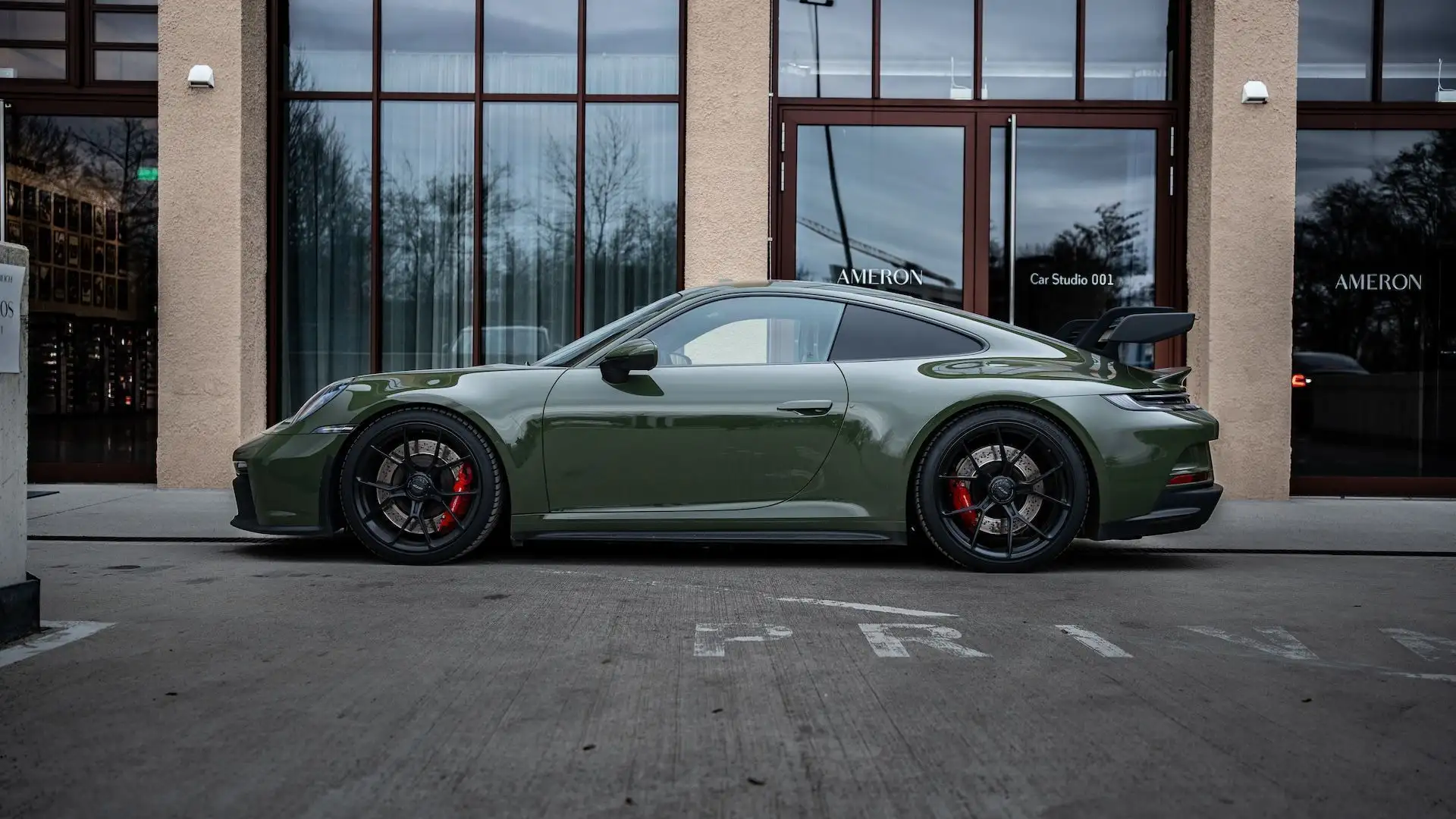
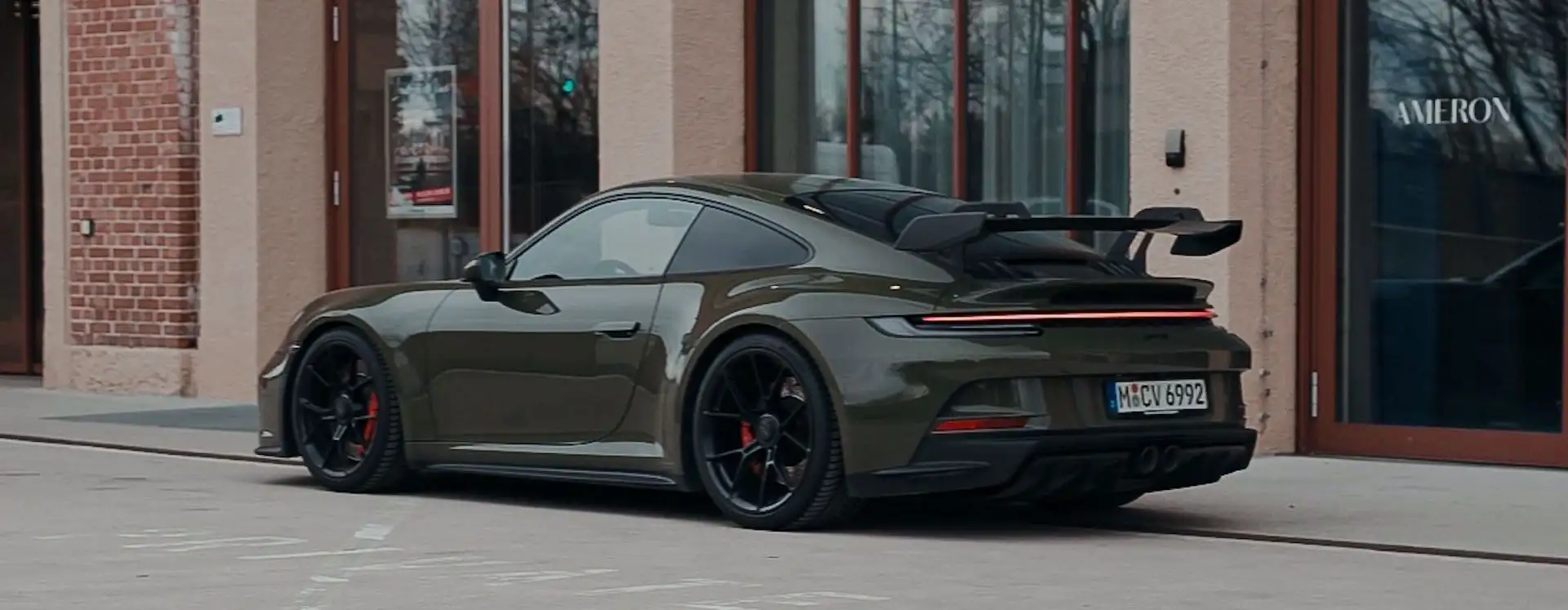
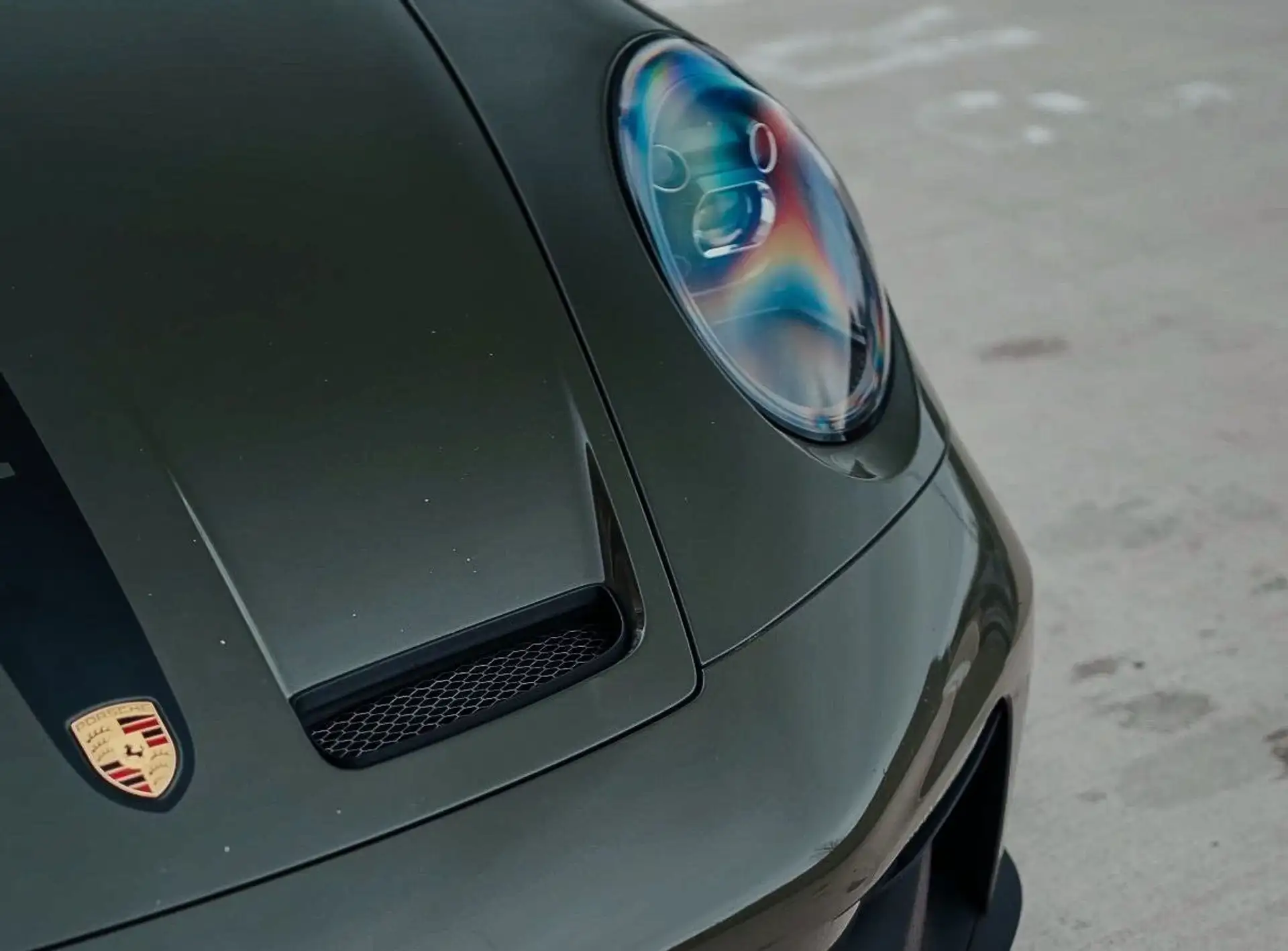
I could admire the Porsche 911 GT3 for hours. This combination of the classic aesthetics of a Porsche 911 and the brutal GT add-ons triggers a whole range of emotions in me, much like a work of art.
Especially the new swan-neck rear wing, which actually looks oversized yet doesn't detract from the beauty of the car, completes the overall picture. This GT definitely earns its name.
The sports car's quality convinces
The Porsche 911 GT3 convinces with tremendous quality that goes beyond the interior and the panel gaps, which are at a high level at many German carmakers these days. What's really impressive here is the repeatability of the car's performance.
The car doesn't seem to mind being driven to its limit on practically every trip, or having material-eating features like launch control used on it regularly. And we can say that with certainty, because those 18,600 miles were covered by many different drivers who wanted maximum driving fun on every single trip.
Despite a sub-7-minute Nürburgring lap: not that little space
When we talk about the GT3's space, we should keep in mind that this car is capable of lapping the Nürburgring Nordschleife in under 7 minutes - a feat that, apart from this car, only a handful of hypercars achieve. And yet the GT3 has a generous front trunk with room for almost two cases of beer, and the cabin leaves enough space to fill the rear with luggage.
Of course, storage space is limited compared to a family car. But for a week of travel, if you choose bags instead of bulky suitcases, finding enough room shouldn't be a problem.
And now for the less shiny points:
1. Delivery time and availability
Now that you've read about the many positive traits of the ultimate track car for the road, you're surely thinking: "Alright, I'm getting one!" But it's not that simple, because the delivery time for a GT3 is currently around 2 years.
2. Power has room to grow
Even though the GT3's power is perfectly sufficient, you'd naturally like to be able to keep up with a McLaren on the Autobahn. Unfortunately, 502 naturally aspirated horsepower isn't quite enough for that. So the sports car is better driven on winding country roads or straight on the racetrack.
3. Our windows had to be replaced frequently
Right at the start, the rear left side window had to be replaced because a customer leaned against it while getting out. The replacement dragged on forever, since the polycarbonate window either arrived already damaged or broke several times during installation. The driver's door window also broke when a colleague accidentally bumped into it while driving.
So it turns out that race-bred cars aren't necessarily suited for everyday use, and you have to be a bit more careful with the lightweight parts than with a regular 911.
Articles that might interest you

BMW i8 - The Underrated Hybrid Sports Car

Is the Porsche Cayman GTS 4.0 with Its Flat-Six Just as Good as a GT4?

Porsche 911 Turbo S - The Best Car in the World?

Our BMW M4 Competition (G82) Review - A True Sports Car?

Porsche Taycan Range: Range Anxiety in an Electric Supercar?