Tesla Model Y Winter Range Test: How Far Does It Really Go in the Cold?
The Model Y from American manufacturer Tesla is Germany's favorite electric car. But has it actually earned that status? What's the real-world range of a Tesla Model Y? In winter especially, that's hard to say. So we at CarVia put the SUV through a proper stress test.
Not convinced by our test? Then you can now try the Model Y for yourself at CarVia in plenty of German cities and rent the Tesla. If Tesla isn't your thing, we also have electric cars from BMW, VW and Porsche.
Table of Contents
Tesla Model Y: maximum range with AWD put to the test
The American manufacturer led by billionaire Elon Musk has established itself as the top dog among EV makers in recent years. On paper, the cars are almost flawless, but that's not good enough for us. Cars have to be driven, after all, before we'll call them good.
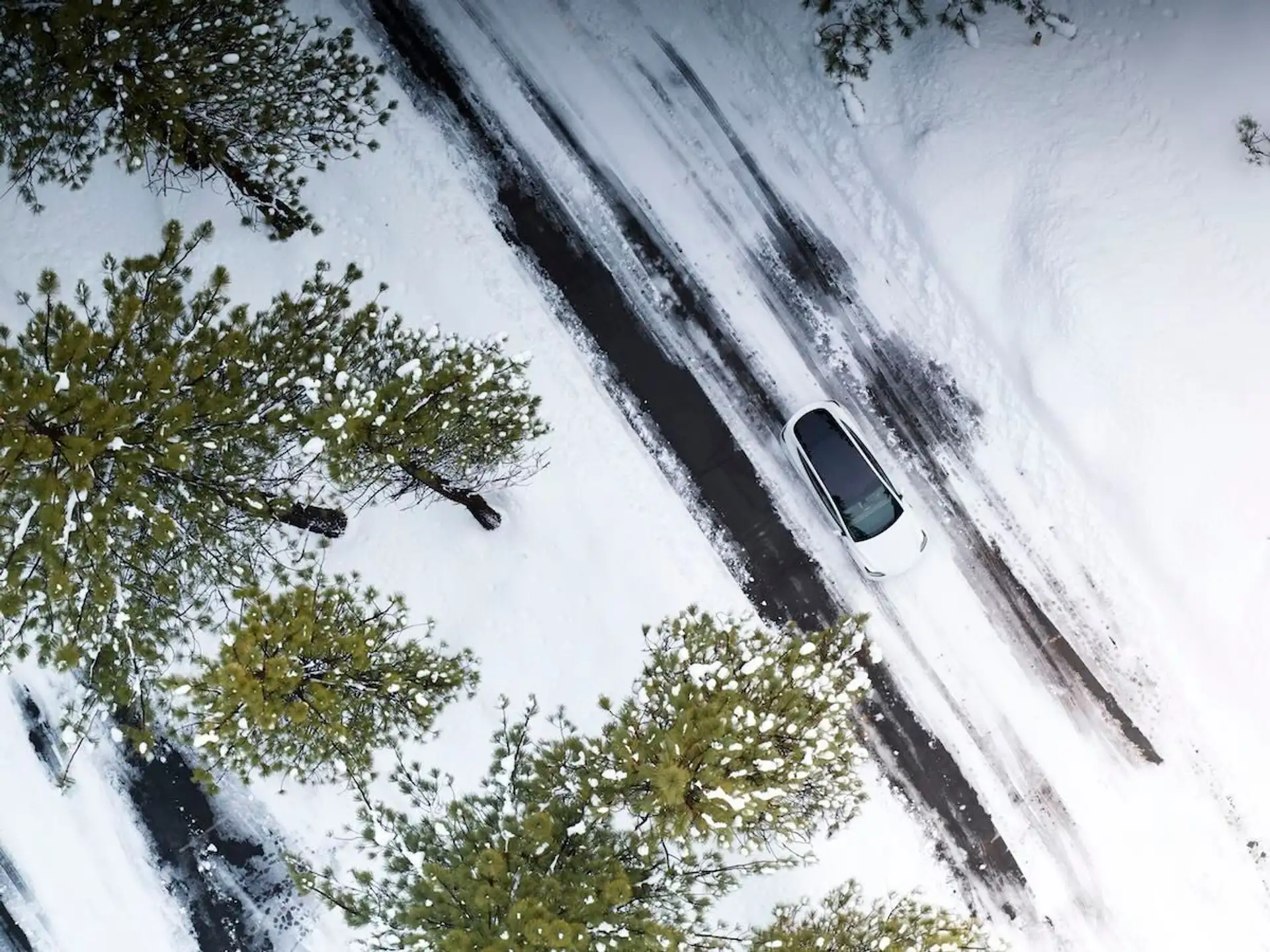
Parked outside our office right now is our Tesla Model Y Long Range AWD, so the maximum-range version with all-wheel drive. We want to find out exactly when the battery really gives up. For the other versions, we then looked up the WLTP figures and estimated the real-world range. (WLTP is the European test cycle, and it's more generous than the EPA.)
Off to the back roads: the test begins
When we get into the car, it's properly nippy. The Tesla has been parked in Munich's Schwabing district since last night, so the battery is just as cold. For now, the state of charge looks optimistic: the onboard computer claims we'll get about 320 miles out of the full battery.
At these outside temperatures, the first doubts about the range creep in, but that's exactly why we're sitting here. At least the weather promises to stay stable despite the cold. It's mostly dry, the sun peeks out from behind the clouds, so these are perfect conditions for our test.
First, though, we have to join the columns of metal crawling from traffic light to traffic light on the way out of the city. While the battery slowly warms up, we tell ourselves that the traffic jam at least lets us reproduce a realistic usage profile.
Once the sheet-metal avalanche slowly clears, we can finally get out of the city. If you've read our Tesla Model 3 test, you know roughly which route we're planning to take: from Munich toward Freising via Erding and on into the Altmühl Valley.
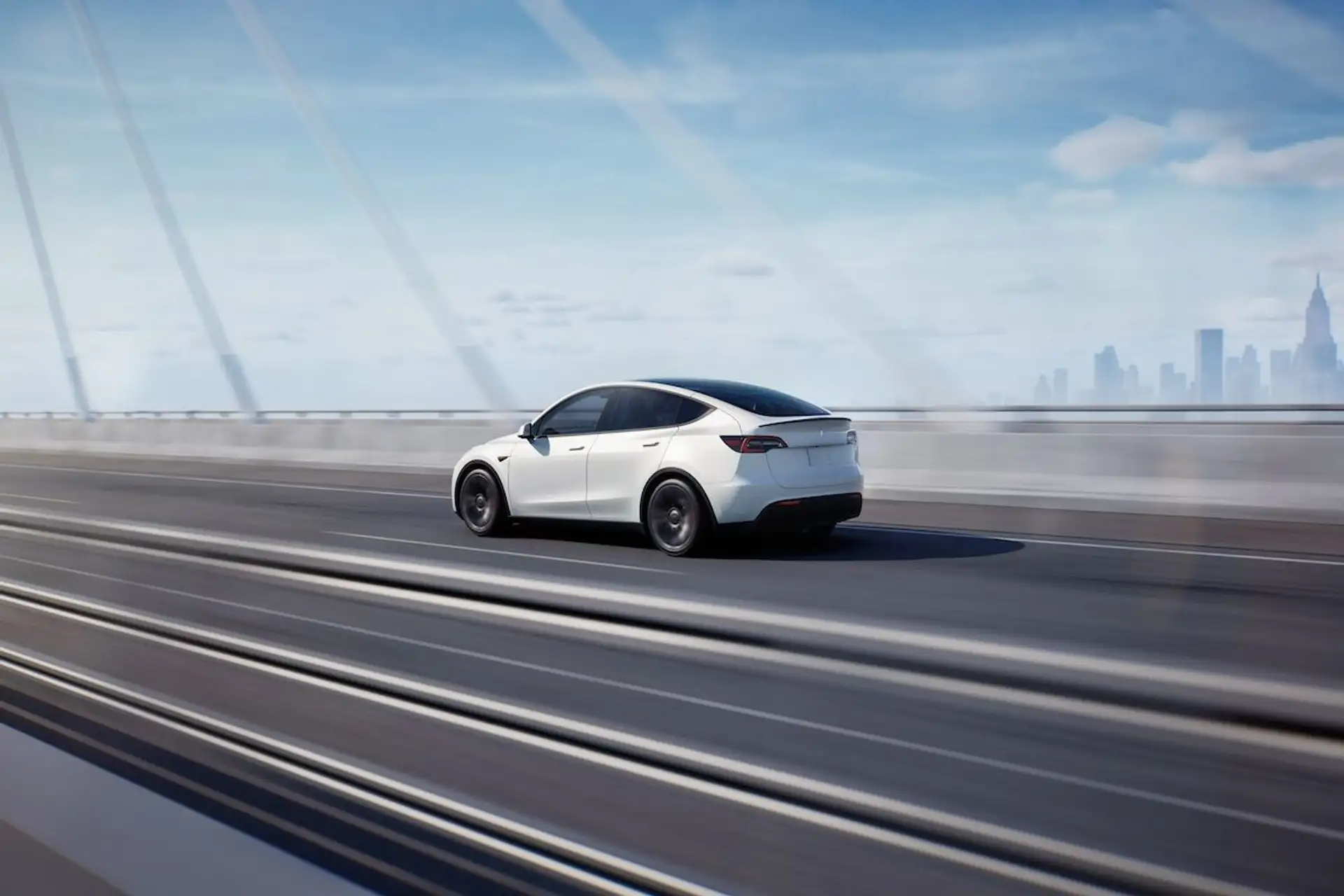
City, country, river: the Tesla Model Y on the road
Via the A9 and then the A99 we head toward Aschheim, and we leave the Autobahn behind in Ismaning. After all, we want to drive back roads - blasting along without corners is boring, and it's not what you do in everyday life anyway. Then it's on via Erding to Freising and via Wolnzach, finally, into the Hallertau - or "Holledau," depending on who you ask. The world's largest hop-growing region unfortunately looks pretty sad in winter. At least you can see the next corner coming nicely through the empty hop gardens.
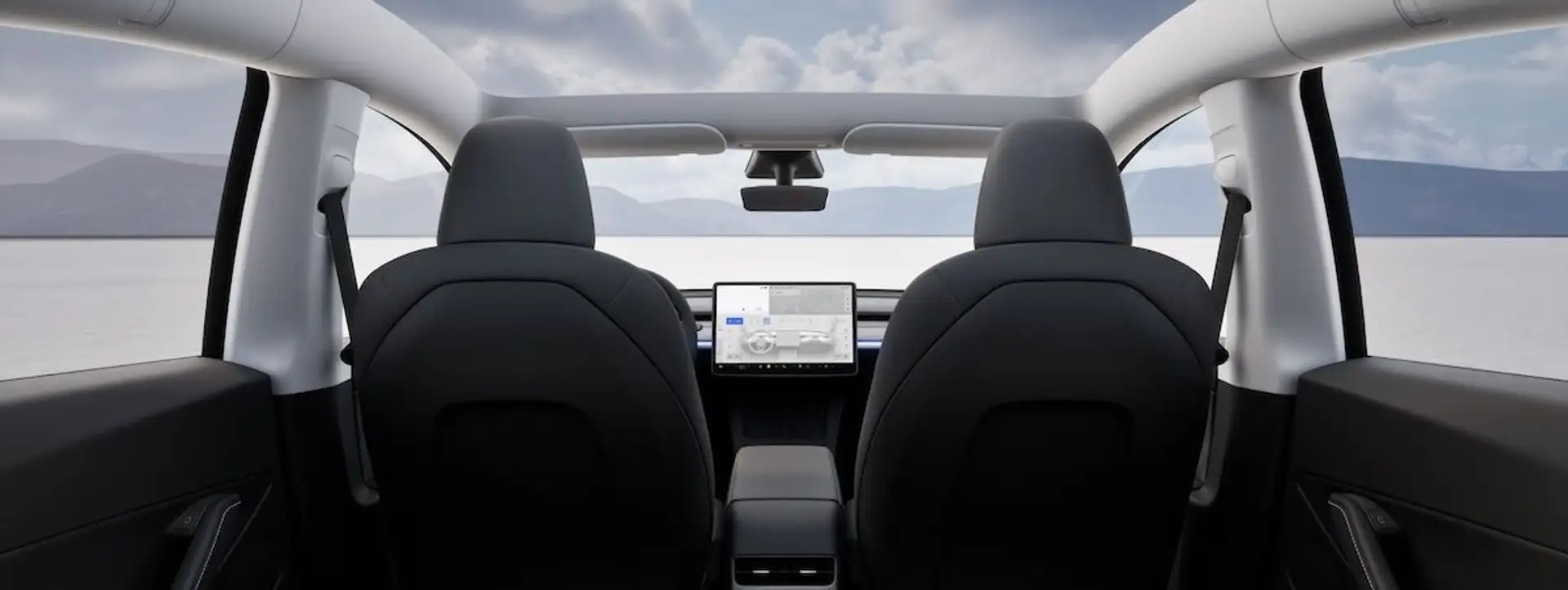
From there we continue into the Altmühl Valley to Kelheim, past the Befreiungshalle (a hilltop monument) to Dietfurt. Our journey over the back roads is nearing its end, because the mileage is getting pretty thin by now. 128 miles and 3 hours and 20 minutes are on the clock. It didn't feel that long at all. Whether that's down to the comfortable interior or the beautiful scenery, we can't quite say.
Tesla Model Y range in winter: our result
While we drove the Model 3 all the way to Eichstätt before we had to turn around because of the range, we don't dare to with the Model Y, maybe because of the detour via the Danube Gorge.
So it's a quick run home, at least as quick as still possible. When we arrive at our location at the Motorworld in Munich, our buffer is fairly slim. Another 22 miles would have been possible. We probably could have driven a bit more economically, but where's the fun in that?
All in all, that puts us at a total distance of 194 miles, covered in the last 4 hours and 30 minutes. Factoring in the remaining 22 miles, the realistic range of our Model Y is about 217 miles. Had we driven a little less Autobahn or paid a bit more attention, 230 miles would have been possible. That's decent, though far less than the WLTP figure.
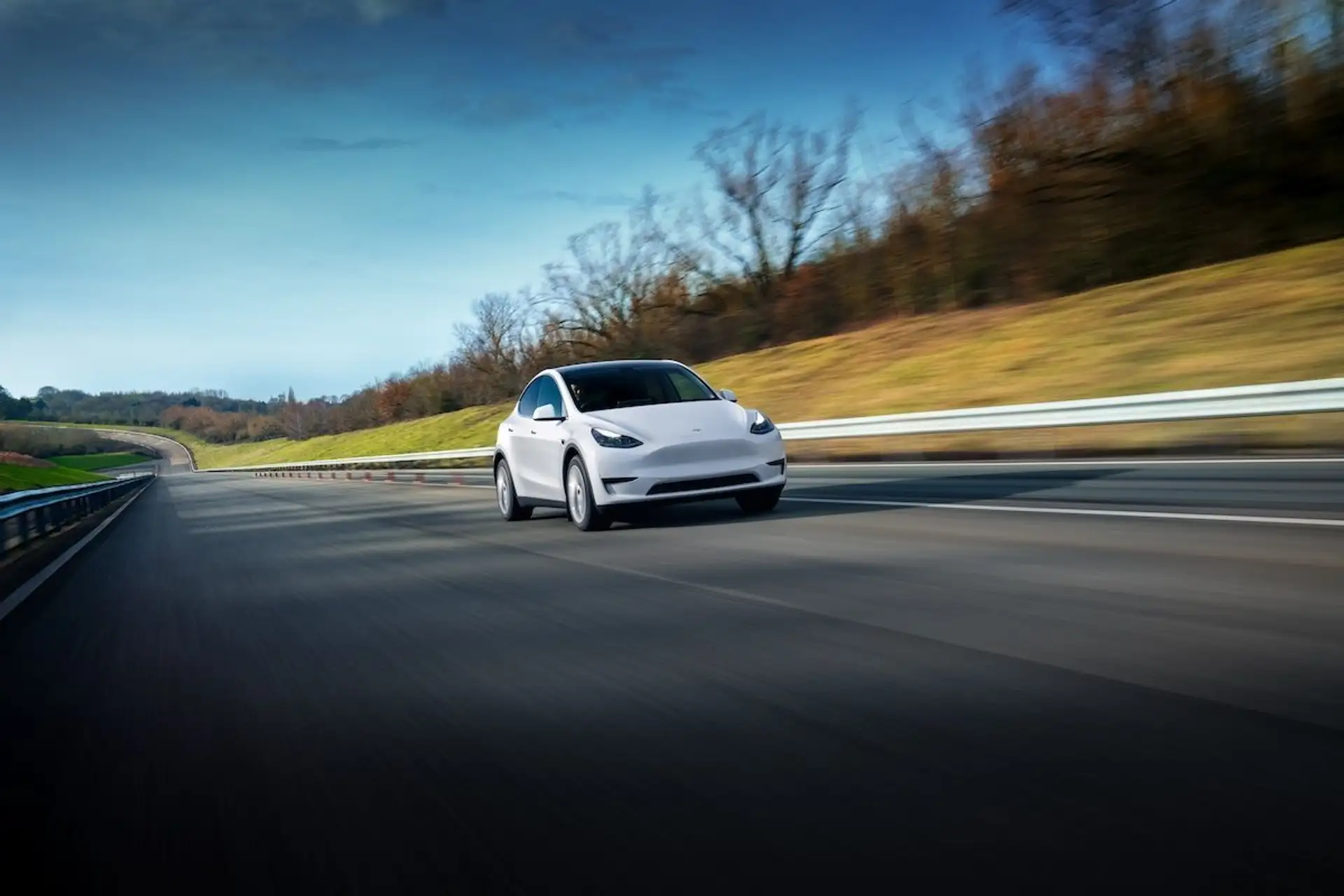
Tesla Model Y range: what the electric SUV can do
Admittedly, we're not giving the Model Y the respect it deserves. After all, the SUV wasn't just the most popular EV in Germany, it was the world's best-selling car of 2023. Unlike the Model 3, which is built in China, the European Model Y actually rolls off the line at the Gigafactory in Grünheide near Berlin - made in Germany, in other words. (US cars come out of Fremont and Austin.)
If that's already a selling point for you, keep reading a little further. Because the most important thing about an EV isn't (only) build quality, it's above all the range. But don't rely on the WLTP figure here, it's usually a lot less.
If "WLTP" doesn't mean much to you, we explain what WLTC and WLTP mean in a separate magazine article.
Tesla Model Y: all versions compared: range, battery size, 0 to 60 and top speed
It would be so easy to explain if there really were just one version of the Tesla Model Y. But that's not the case, Tesla now builds four different versions of the SUV. Strictly speaking there are even 5, because the base Model Y was relaunched with minor changes. The new variant, Y7CR, has been available in Europe since 2023 and uses a Blade battery from BYD. Old and new don't differ much, though the maximum charging speed rises from 170 kW by a whole 5 kW.
Beyond that, as with the Model 3, the manufacturer offers the "Long Range" version. Tesla then distinguishes between rear-wheel drive (RWD) and all-wheel drive (AWD). In the Performance version, the Model Y gets more power. With the extra output, the Tesla accelerates noticeably quicker and is faster on the highway too, but that's also reflected in the range you actually get.
The estimated real-world range (ERR) assumes ideal conditions: a temperature of 68 to 73 °F with no air conditioning or heating. In high summer and in winter, the range drops because of these energy hogs. If you have to switch them on due to heat or cold, the range shrinks. We call that the minimum ERR in the table below.
| Model | RWD | Long Range RWD | Long Range AWD | Performance |
Top speed | 135 mph | 135 mph | 135 mph | 155 mph |
0–62 mph | 6.9 s | 5.9 s | 5.0 s | 3.8 s |
Battery size | 57.5 kWh | 75 kWh | 75 kWh | 75 kWh |
Max. DC charging speed | up to 175 kW | 250 kW | 250 kW | 250 kW |
Range (WLTP) | 283 mi | 373 mi | 337 mi | 319 mi |
Estimated real-world range (ERR) | 252 mi | 329 mi | 314 mi | 298 mi |
Minimum ERR | 180 mi | 239 mi | 227 mi | 217 mi |
Tesla Model Y: how to go easy on the battery in winter
The Model Y RWD is currently the cheapest Tesla, with all the discounts, even cheaper than the Model 3 (as of June 2024). That obviously means you're buying the lowest motor and battery output the American manufacturer has to offer. But that hardly matters, as long as you follow a few tips that will literally get you further in winter.
Recover energy while driving with regenerative braking
The principle of regenerative braking is based on feeding energy back into the battery while braking or decelerating. In cars like the BMW i3, it's often enough to simply lift off the accelerator to recover energy. You hardly need to touch the brake at all.
By using regen efficiently, ideally in an Eco or coasting mode combined with anticipatory driving, you can achieve long ranges even in winter. In our test, a more frugal driving style would certainly have gotten us another 6 to 12 miles.
Avoid fast charging in winter
Slow charging is easier on the battery in the long run, especially at cold temperatures. Fast charging at low temperatures with a cold battery can impair battery capacity. The electrochemical processes in the battery cells need a certain minimum temperature; otherwise, the internal resistance in the cells is quite high. You get a traffic jam inside the battery, so to speak. Charge too aggressively in that state and lithium can deposit on the anode as metal (known as lithium plating). The result is irreparable damage to the battery and reduced performance.
Instead, you should charge at low currents, unless the battery is still warm after a long drive. Smart thermal management in the car can also help in winter by distributing the heat generated sensibly and thereby protecting the car. On top of that, you can sometimes set when the car should charge. That gives the computer time to precondition the battery.
CarVia verdict: Germany's favorite EV: deservedly so?
Despite all the criticism Elon Musk attracts: with the Tesla Model Y, the American company has created a modern classic. If you're flirting with EVs, you can't go far wrong with the SUV. No wonder so many people over here are buying a Model Y. The performance is right, depending on the version the motors put a serious amount of horsepower onto the road, and the range holds up.
On that last point you could of course still grumble that it isn't enough. But we were on the road with our Tesla for well over 4 hours and would surely have managed 5. If you can't stretch your legs for 18 minutes after that much time behind the wheel while the SUV sits at a Supercharger, you need to question either your expectations or your time management.
We can warmly recommend the Tesla Model Y in any case: whether to buy or to rent from us. And if you've always wanted to try the Supercharger network, you can also book the Model 3 Performance with us.
Articles that might interest you

BMW i8 - The Underrated Hybrid Sports Car

Porsche 911 (992) Carrera S Cabriolet: How It Compares to the 991

Audi R8 V10 Spyder Review - Power, Sound and Brutal Depreciation

Is the Porsche Cayman GTS 4.0 with Its Flat-Six Just as Good as a GT4?

Porsche 911 Turbo S - The Best Car in the World?

Our BMW M4 Competition (G82) Review - A True Sports Car?
Porsche 911 GT3 Review: Our Verdict After 18,600 Miles

Porsche Taycan Range: Range Anxiety in an Electric Supercar?
Tesla Model 3: Range in Winter