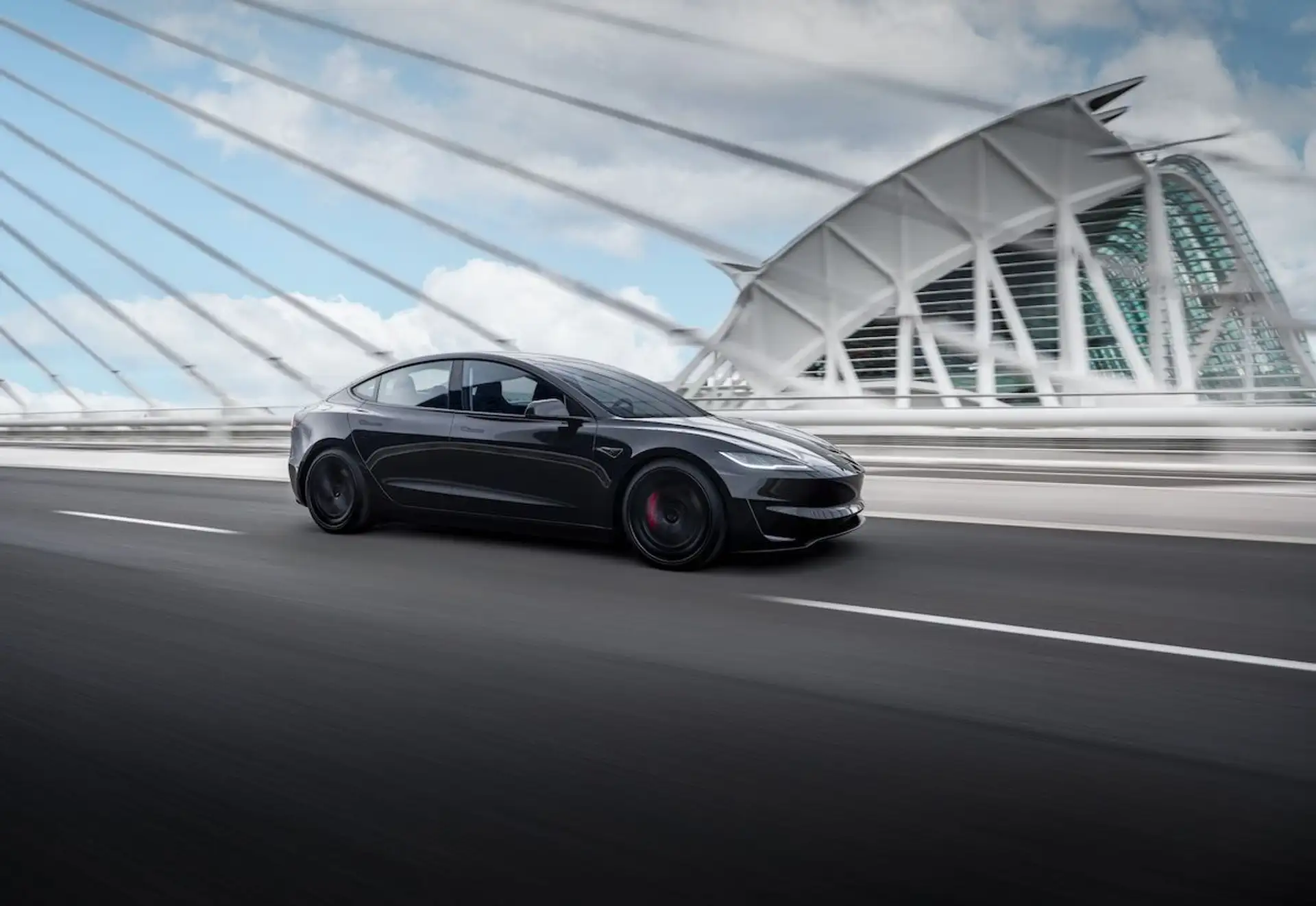
Tesla Model 3: Range in Winter
When Tesla entered the market, its products thoroughly shook up the status quo. The Tesla Model 3 is especially popular, partly because of its bearable price tag, but also because of its decent range. How far you actually get, though, depends entirely on the exact version of the car - and on the weather. We tried out how big the Tesla Model 3's range really is in winter.
If you'd like to sit in a Tesla yourself, you can do that with us both in our car sharing in Munich and through our rental fleet. You can rent the Tesla Model 3 Performance from us in many German cities.
Table of Contents
Tesla Model 3 range in winter: there's no such thing as bad weather, …
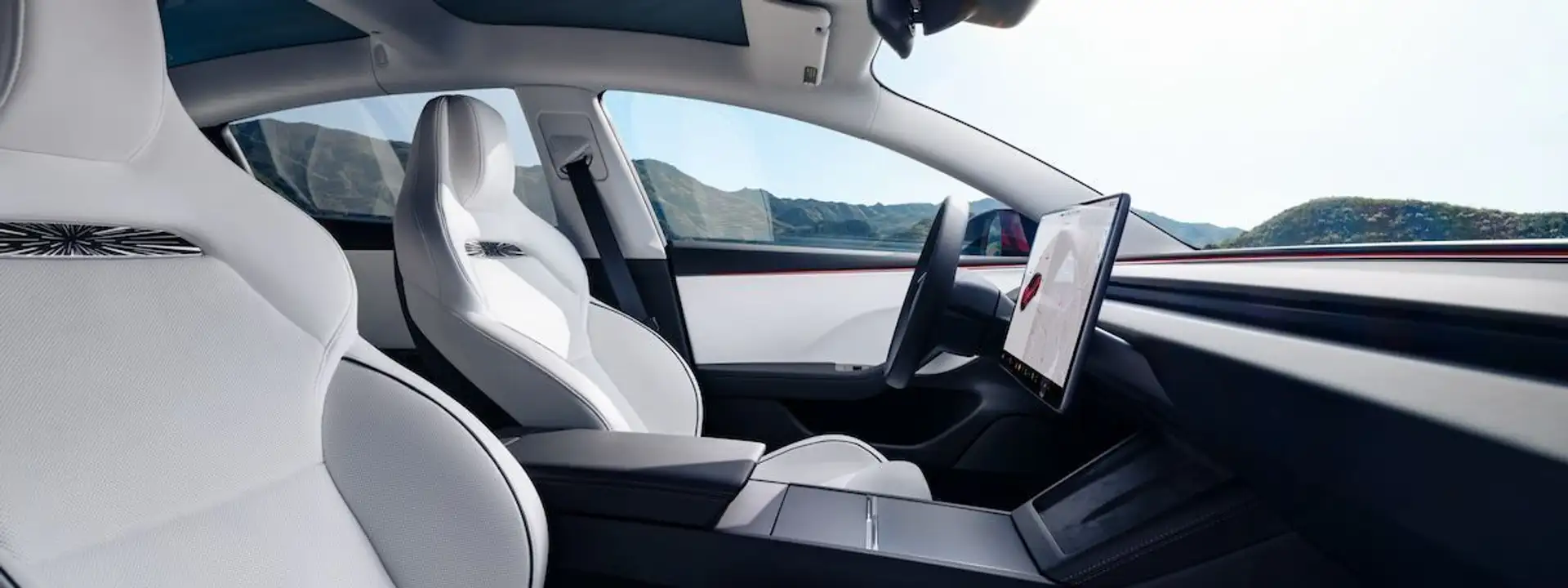
… only the wrong clothes. Who would've thought the old saying applies to your set of wheels, too? Most people still assume that electric cars are guaranteed to be the wrong choice in winter. But that doesn't have to be the case. To prove it, we pulled our Tesla Model 3 Performance out of the garage in freezing temperatures. We wanted to know how far we'd actually get below freezing.
EVs in winter: how we tested
We set off from our office in Munich's Schwabing district. Temperatures are hovering around freezing. At least the roads are dry – no ice, no snow. Those are ideal conditions for our test. The heater doesn't have to work too hard yet, but the winter jacket goes in the trunk anyway.
Our car-sharing Tesla is fully charged, the available range reads 285 miles - "let's wait and see", as German soccer legend Franz Beckenbauer used to say.
We certainly won't find out whether that promise holds up in city traffic, though. So out of Munich - the country roads are calling. The fact that city traffic in Germany's car capital doesn't make it easy for you isn't a problem. On the one hand, it gives the battery a chance to warm up slowly; on the other, the constant stop-and-go at traffic lights lets us give you a realistic assessment.
Otherwise, the plan is to drive as much country road as possible and take the Autobahn back to Munich by the most direct route, cutting it as close as we can. Finally, we cross Munich's city limits.
How does the Tesla perform in our own test? The real-world range
We head onto the A9 Autobahn, turn onto the A99 toward Aschheim and leave the freeway toward Ismaning. We head for Freising via Erding, then on into the Hallertau hop-growing region to Wolnzach - country roads all the way. Near Aiglsbach we briefly hop onto the A93 for a change of pace, but soon leave the Autobahn again to drive past the Hall of Liberation monument in Kelheim.
Through the Altmühl valley we continue to Beilngries, Kinding and Eichstätt. Here we're already past the 50% mark on the battery, and we've only driven about 145 miles. Before we really can't make it home anymore, we decide to head back – but of course not without one final stress test. That means Autobahn.
The signs on the A9 fly past us, the battery's capacity is dropping at a worrying rate. But the Tesla Model 3 Performance holds its own. When we arrive at our rental hub at Motorworld in Munich, the trip meter reads 205 miles. Even so, the onboard computer tells us a full 37 more miles would still be possible. Realistically it would probably have been another 30.
We're satisfied, though, and end up with a total range of roughly 240 miles in winter. For the weather, that's still a solid figure, but the Tesla doesn't get anywhere near the WLTP range or the range it promised us at the start.
Tesla Model 3 range: tough competition for Mercedes, BMW and co.
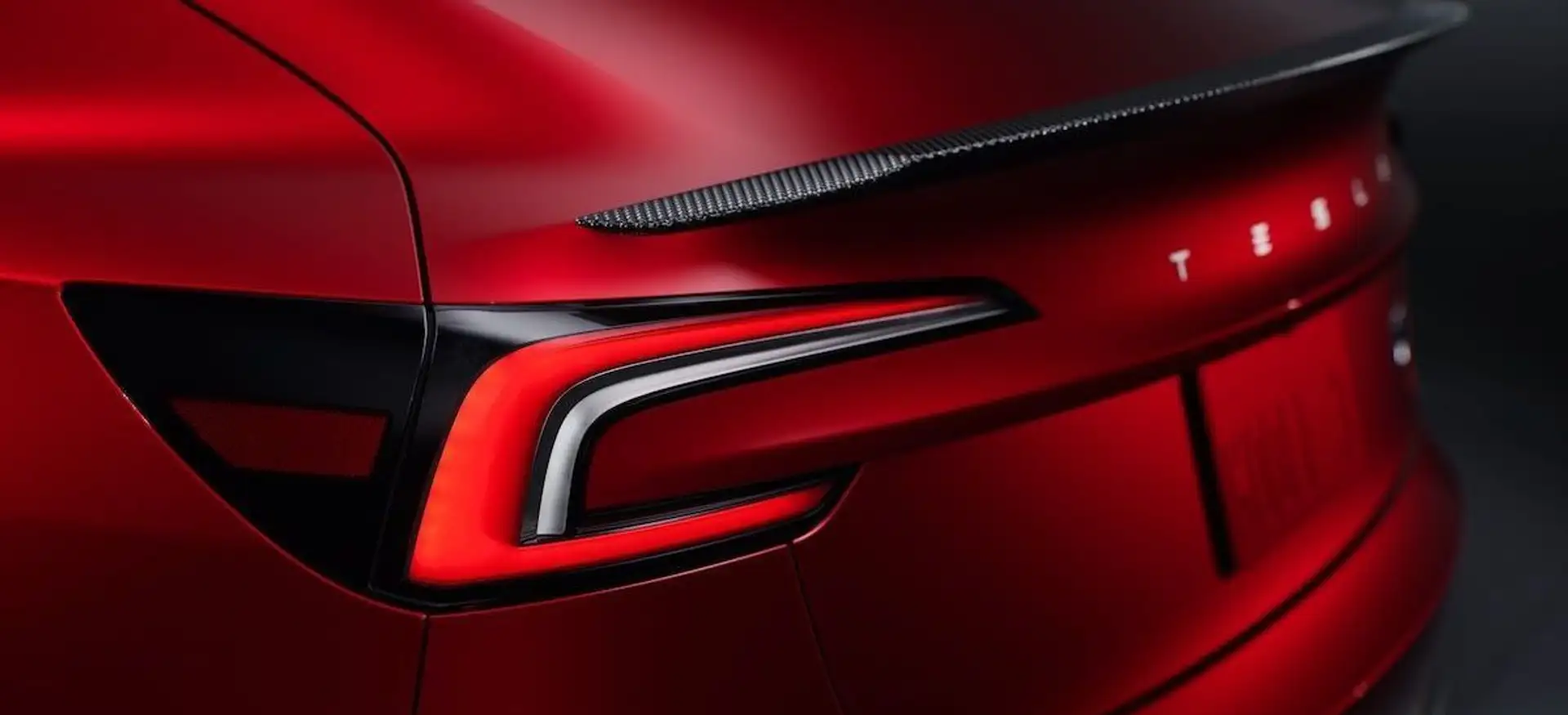
So with the Tesla Model 3 Performance you can cover nearly 250 miles even in winter. But that only partly answers the question of the Model 3's range - after all, there are now different versions that share the name but differ, sometimes massively, from each other. Not least in their WLTP range.
If WLTP doesn't mean much to you (it's the European test cycle: think EPA, but a bit more optimistic), we explain what WLTC and WLTP mean in a separate magazine article.
Tesla Model 3: 1 model, many variants
Before we can give you a definitive answer to the question of the Model 3's range, we first have to introduce you to the most popular variants of the Model 3. Because there are quite a few of them. Currently, only three versions of the Model 3 are built: one with rear-wheel drive (RWD), one designed for all-wheel drive and long distances (Long Range AWD), and the Performance model.
As one of the most established EVs on the market - the first Model 3 rolled off the line in 2017 - there are several versions that are no longer available new but can still be found on the used market. As recently as late 2023, the Model 3 received another update plus a facelift, and the new models have been on the road since early 2024. With the new Performance models there are even differences depending on where they're built. The model from Fremont tops out at 142 mph with a battery capacity of 82 kWh; the one from Shanghai manages 163 mph with 79 kWh.
Overview of Tesla Model 3 power and range
So that you have a proper overview of range and so on, we've broken down the most important data on the models current up to 2023/2024 as well as the new ones in a table.
The estimated real-world range (ERR) is based on ideal conditions for the car - we're assuming roughly 68 to 73°F, with the A/C and heater switched off. In winter or summer you obviously won't get as far, since those energy hogs are in use. The range achieved under those circumstances is what we call the minimum ERR.
Model | RWD (old) | Long Range AWD (old) | Performance (old) | RWD (new) | Long Range AWD (new) | Performance (new) |
Top speed | 140 mph | 145 mph | 162 mph | 125 mph | 125 mph | min. 142 mph |
0–62 mph | 5.8 s | 4 s | 3.1 s | 5.8 s | 4.2 s | 2.9 s |
Battery size | 57.5 kWh | min. 75 kWh | min. 75 kWh | 57.5 kWh | 82 kWh | min. 79 kWh |
Max. charging power (DC) | up to 170 kW | up to 250 kW | up to 250 kW | up to 170 kW | up to 250 kW | up to 250 kW |
Range (WLTP) | 305 mi | min. 348 mi | 352 mi | 319 mi | 391 mi | 328 mi |
Estimated real-world range (ERR) | 295 mi | 348 mi | 329 mi | 304 mi | 363 mi | 335 mi |
Minimum ERR | 208 mi | 249 mi | 239 mi | 214 mi | 258 mi | 242 mi |
Protecting the battery in winter: how to go farther
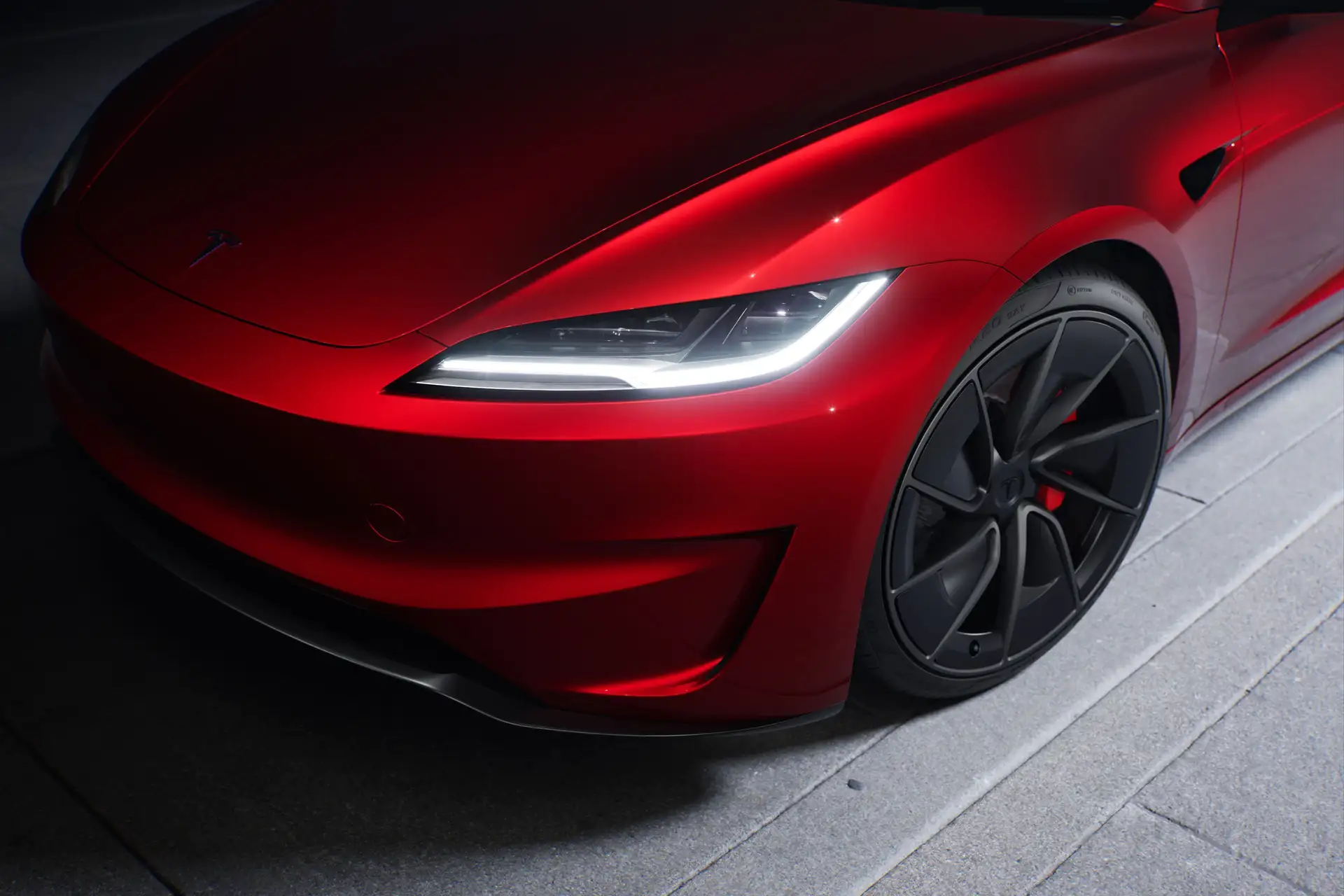
Heat and cold are among the biggest enemies of EVs. Below freezing, the battery visibly suffers. Still, there are a few tips and tricks that will make sure you don't end up stranded on the side of the road.
Regenerative braking: generating power while driving
The first has to do with regenerative braking, i.e. feeding energy back into the battery when braking or slowing down. Sometimes you don't even need the brakes for this - in the BMW i3, for example, you basically just have to lift off the accelerator.
If you make full use of regen, ideally combined with Eco mode (if available) and anticipatory driving, you'll get far even in winter. In our test we didn't drive particularly economically - otherwise we'd certainly have cracked the 250-mile mark.
Especially in winter: avoid fast charging
You shouldn't always fast charge. So-called trickle charging can help preserve battery capacity in the long run. That's especially advisable below freezing.
Because even a few degrees below room temperature the electrochemical processes in the battery cells slow down. That increases the internal electrical resistance. If you then try to hammer as much power as possible into the battery in a short time at a fast charger, the lithium ions can't keep up and the cells can be damaged. In the long run, you're putting your range and battery capacity at risk.
- So charge at low currents.
- The exception here is when you're just returning from a longer drive. After all, the battery is already warm then.
- If your car offers intelligent thermal management, that's worth its weight in gold in winter. It distributes the heat generated across the drivetrain, battery and cabin - charging might take a bit longer as a result, but you're taking care of the car.
CarVia verdict: is the Tesla Model 3 the perfect EV?
Tesla showed everyone. Since the Model Y, Model 3 and Model S hit the market, the brand has managed to become almost synonymous with electric cars as a whole. In the process, Elon Musk outpaced Volkswagen, Mercedes, BMW and co. – only in recent years have German and Chinese manufacturers caught up with the American automaker, not just technologically but also in terms of sales. It was only in 2023 that BYD sold more EVs than Tesla.
Tesla owes its long dominance not only to the popular Tesla Model Y, but also to the "people's Tesla", the Model 3. That's not just because it's the cheapest Tesla, but also because of its really good range - even if the WLTP range doesn't really hold up, as our own test shows.
But even if 250 miles in bad conditions aren't enough for you and you often drain the battery completely, that's still not an argument against the Tesla Model 3. The Supercharger network that Tesla has invested heavily in pays off in full for customers. It's rare that you don't come across a single charging station, especially since the car's onboard computer explicitly points them out to you. At a Supercharger, even with the base version of the Model 3, you're back on the road within 25 minutes (charging time from 10 to 80 percent).
All in all, the Tesla Model 3 is probably the most practical everyday EV on the market. The price is right (for an EV), the charging infrastructure is good, and the range is decent even on the base versions. That's one of the reasons the Model 3 is in our fleet.
If you want to find out for yourself how far you can go in one, you can rent the Tesla Model 3 Performance from us. Alternatively, we also offer other EVs for a direct comparison. Take a look at our whole fleet right away - there's guaranteed to be something for you.
Articles that might interest you

BMW i8 - The Underrated Hybrid Sports Car

Is the Porsche Cayman GTS 4.0 with Its Flat-Six Just as Good as a GT4?

Porsche 911 Turbo S - The Best Car in the World?

Our BMW M4 Competition (G82) Review - A True Sports Car?
Porsche 911 GT3 Review: Our Verdict After 18,600 Miles

